Blog
Stop! Read This Before You Buy Chinese Jadeite Online (15 Rules To Avoid Getting Scammed)

Stop! Read This Before You Buy Chinese Jadeite Online (15 Rules To Avoid Getting Scammed)
Chinese jadeite is suddenly everywhere online.
You see “imperial green” bangles for the price of a T-shirt, “icy lavender” pendants on flash sale, and “100% natural A-jade” beads shipped from anonymous warehouses. Some of it is real. A lot of it is not.
As demand for jadeite has grown globally, so have scams, imitations, and heavily treated stones that are sold as “natural.” TATHATA+2jade-collector.com+2
If you want to buy Chinese jadeite online safely – whether for spiritual use, fashion, or investment – you need a clear, practical checklist.
This guide covers:
The basics: jade vs jadeite, and the A/B/C treatment system
The most common online jade scams
Fifteen rules to follow before you click “Buy Now”
How to read a jade certificate like a pro
A copy-paste checklist and SEO-friendly FAQ
Step Zero: Know What You’re Buying – Jade vs Jadeite vs “Jade-Like”
Jade Is Two Different Minerals
“Jade” is an umbrella term for two gem materials: jadeite and nephrite. GIA+1
Jadeite
• Rarer, denser, and often more valuable
• Wide color range: vivid green, lavender, icy white, yellow, black
• Most fine “Chinese jadeite” comes from Myanmar (Burma) and is carved, traded and worn in Chinese marketsNephrite
• Slightly softer and less dense
• Usually more opaque with an oily luster
• Historically mined in China and Central Asia
Most high-end bangles and pendants targeted at Chinese buyers are jadeite jade, not nephrite. When you shop online, make sure listings clearly say “jadeite” rather than just “jade” or “stone.”
The Three Big Value Factors
According to GIA and major jade references, the three most important quality factors for jadeite value are: GIA+2Pala international+2
Color – hue, saturation, and evenness
Transparency – from opaque to “icy” semi-transparent
Texture – fine, even crystal structure vs coarse or cloudy
Everything else – carving, size, origin, brand – comes after these basics.
The A/B/C Code: The One Thing Scammers Hope You Don’t Understand
If you only remember one technical concept, make it this.
Type A, B, C Jadeite – What The Letters Mean
Modern jade trade uses an A/B/C system to describe treatments: Wikipedia+4Jadeite Atelier+4Ai Jewellery+4
Type A Jadeite
• Natural jadeite jade
• No chemical bleaching, no polymer impregnation, no artificial dye
• Only traditional cleaning, cutting, polishing; a thin layer of colorless wax is acceptableType B Jadeite
• Jadeite that has been acid-bleached to remove brown stains and then impregnated with clear polymer (resin)
• Looks brighter and more translucent at first, but is structurally weakened; polymer can age, crack, or yellowType C Jadeite
• Jadeite that has been dyed to enhance or change color
• Dyes can fade or shift over time, especially under light or chemicalsType B+C
• Bleached, polymer-impregnated and dyed
Most serious collectors only want Type A. Scammers often sell B or C jade – or even non-jade stones – as “A-grade natural jadeite.”
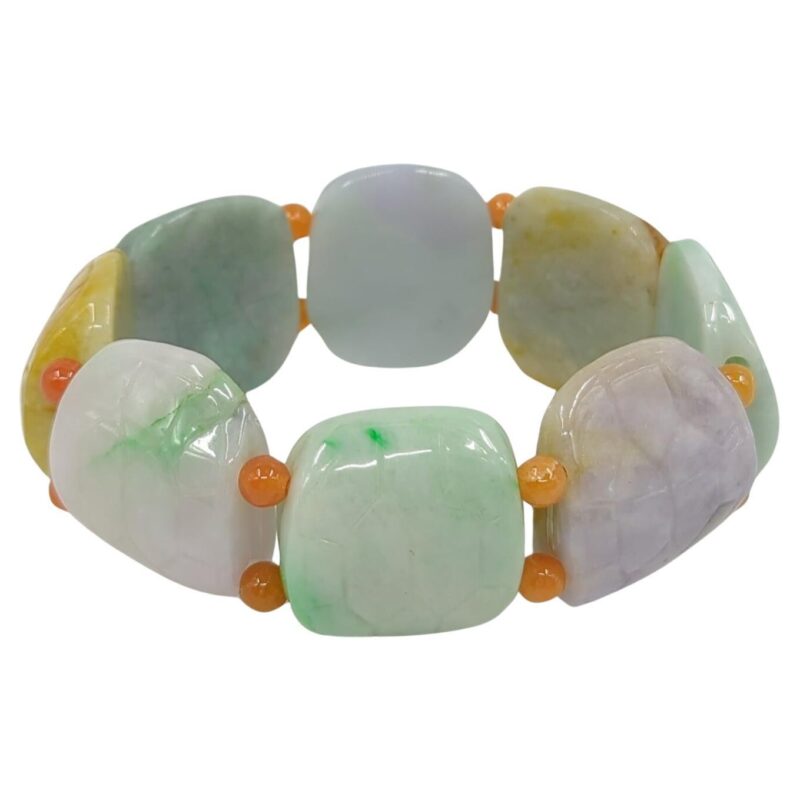
The Dark Side: Common Online Fake Jade & “Too Good To Be True” Tricks
Here are the main things you are up against when you shop jadeite online.
Imitations
• Glass, serpentine, dyed quartz, polymer-impregnated aventurine, plastic
• Some synthetics are sold as “ice jade” or “Myanmar jade” but are not jade at all GIA+1Heavily Treated Jadeite
• Type B/C/B+C jade sold as “natural”
• Acid-bleached, filled and dyed stones can look impressively bright in photos, but have much lower value and durability MAYS GEMS+2Worthmore Jewelers+2Misleading Terminology
• “Jade-like”, “jade color”, “Burma style bangle”, “Asian stone”
• These phrases dodge the word “jadeite” and avoid clear treatment disclosureFake Or Meaningless Certificates
• In-house “certificates” printed by the seller
• Unverifiable “lab reports” with no recognized lab name or report number
• Photos of someone else’s GIA report attached to a totally different stone jade-collector.com+2artjadera.com+2
The good news: if you follow the 15 rules below, you can avoid most of these traps.
15 Rules To Follow Before You Buy Chinese Jadeite Online
Rule #1: If The Listing Doesn’t Say “Jadeite,” Assume It Isn’t
A serious seller will clearly state “jadeite jade” and often “Burmese jadeite” in the product description. If you only see “jade stone,” “green stone,” or vague terms, treat that as costume jewelry unless proven otherwise. GIA+1
Rule #2: Demand Treatment Transparency (A / B / C Stated Clearly)
Look for language like:
• “Natural Type A jadeite, no dye, no polymer impregnation”
• “Lab-certified natural jadeite jade”
If treatment is not mentioned at all, or the seller becomes defensive when asked, that is a red flag. Serious jade brands actively educate customers about Type A vs B vs C. Jade Artisan+3Jadeite Atelier+3Ai Jewellery+3
Rule #3: Check The Seller Before The Stone
Do a basic due-diligence audit:
Do they have a real website, business address, and about page?
Are they clearly focused on jade or fine jewelry, or are they a random general store?
Are there consistent reviews on multiple platforms, not only a few testimonials on their own site?
Do they show actual photos of their workshop, team, or storefront?
Several jade education sites emphasise that reputable dealers and clear business identity are your first line of defence. jadeite.yipinqian.com+3jade-collector.com+3Jade Artisan+3
If a seller is basically anonymous, think twice.
Rule #4: Use The 5-Photo Test (Or Walk Away)
For meaningful online evaluation, you should at minimum see:
Full piece in neutral daylight
Close-up of front
Close-up of back
Side/profile showing thickness
Photo of any lab certificate or hallmark
If the listing relies on:
• One over-edited glamour photo
• Filters and heavy color grading
• Obvious stock images used across many shops
…you have no real information. Ask for extra photos and a short video; if they cannot provide them, close the tab. TATHATA+2jade-collector.com+2
Rule #5: Watch For “Neon Green For Cheap” – Classic B/C Jade Signal
High-quality vivid green jadeite (especially semi-transparent “imperial” tones) is rare and expensive. GIA and specialist guides note that color, transparency and texture drive value; bright green with good translucency is particularly prized. GIA+2Pala international+2
If you see:
• Neon, almost glowing green
• Perfectly even color across a big bangle or cabochon
• Price that looks like costume jewelry
…you are almost certainly looking at dyed or polymer-filled material, or an outright imitation. MAYS GEMS+2Worthmore Jewelers+2
Rule #6: Use Basic “Reality Checks” On Photos
Even without tools, you can spot problems:
Too perfect: completely uniform, hyper-saturated color and flawless texture at a bargain price.
Suspicious reflections: glassy mirror-like reflections with no depth may suggest glass or coated material.
Repeated images: run a reverse image search; if the same photo appears under several shop names, the listing is copy-paste.
Education sites for jade collectors repeatedly warn about reused photos and over-edited images as common scam tactics. jade-collector.com+2Jade Artisan+2
Rule #7: Learn To Read A Jade Certificate (And Spot Fake Ones)
A real lab report from a recognized gemological lab should state at least: jadeite.yipinqian.com+3GIA+3GIA 4Cs+3
Identity: “Natural jadeite jade” (sometimes “Fei Cui” in Chinese labs)
Treatment: “No indications of impregnation or dye detected” (for Type A)
Color description and transparency
Measurements and weight
Lab name, logo, report number, date
Red flags:
• Certificate has only marketing language, no clear treatment line
• Lab name is unknown and cannot be found online
• Report number does not verify on the lab’s website
• Certificate photo clearly shows a different stone
Always verify report numbers directly on the lab’s official site when possible.
Rule #8: Prefer Independent Labs Over Seller “House Certificates”
Many online stores issue their own “grade” papers. These are essentially brochures. For higher-value purchases, favor independent labs (national gem labs, GIA, well-known Asian jade labs) over any in-house certificate. GIA+2GIA 4Cs+2
Rule #9: Read The Product Description Like A Contract
Responsible sellers include:
• Material: “natural jadeite jade”
• Origin (if known): Myanmar/Burma, etc.
• Grade / treatment: Type A / B / C with explanation
• Color description and approximate quality notes
• Dimensions (mm) and weight (ct or g)
If key information is missing – especially treatment and dimensions – ask for it. A detailed description is a sign the seller knows what they are doing. Pala international+2GIA+2
Rule #10: Use A Price Sanity Check (Anchor Your Expectations)
Exact pricing varies by market, but jade buying guides agree on one point: top-quality jadeite is never cheap. Color, transparency and texture create huge price differences. GIA+2Pala international+2
As a rough mental rule:
• Anything advertised as “imperial green” or “icy high-grade jadeite” at budget-fashion prices should be treated as suspect.
• Genuine Type A bangles and larger cabochons with strong color and translucency belong in mid to high price brackets, not impulse-buy bins.
If the price makes no sense compared to the story being told, trust your suspicion.
Rule #11: Check Return Policy, Warranty, And Payment Security
Before you buy:
Confirm there is a clear return/refund policy in writing.
Use secure payment methods (credit card, established platforms) that allow chargebacks if something is wrong.
For higher-value items, check whether the seller offers insured shipping and what happens if a piece arrives damaged or clearly misrepresented. TATHATA+2artjadera.com+2
Scammers often hide behind “final sale / no return” language.
Rule #12: After Delivery, Test With Eyes, Hands, And (Optionally) A Professional
When your jade arrives:
Compare it carefully to the listing photos.
Feel for cool, heavy, solid weight – real jadeite is denser than plastic or resin and feels cool to the touch. gemporia.com+2MAYS GEMS+2
Under magnification, look for bubbles (glass), obvious dye pools in cracks, or plastic-like surfaces. MAYS GEMS+2GIA+2
For expensive pieces, consider:
• Taking it to a local gemologist or appraiser
• Confirming that the physical stone matches the lab report (dimensions, description, appearance)
Rule #13: For Big Purchases, Always Get A Second Opinion
If you are spending serious money:
• Ask an independent gem lab for verification
• Or use a trusted local jeweler who has experience with jade
GIA and other institutes emphasize that professional testing is the only definitive way to identify jadeite, detect polymer impregnation, and distinguish it from similar materials. GIA+2GIA+2
Rule #14: Document Everything In Case You Need A Chargeback
If something feels wrong:
Save screenshots of the listing and description.
Photograph the piece from multiple angles.
Keep the invoice, packaging, and any certificate photos.
If you later discover the stone is misrepresented, this documentation is essential for disputes with payment providers or platforms. jade-collector.com+1
Rule #15: Educate Yourself Continuously – Scammers Change, Knowledge Doesn’t
Recent jade education articles hammer the same message: your best protection is knowledge. jadeite.yipinqian.com+3jade-collector.com+3Jade Artisan+3
Spend time:
• Reading buying guides from gem labs and serious jade brands
• Learning to recognize A/B/C treatments
• Comparing real-world price ranges
Over time, fake listings start to “look wrong” instantly.
Copy-Paste “Safe Jadeite Purchase” Checklist
You can use this as a sidebar or downloadable graphic:
Listing says “jadeite jade” (not just “jade”).
Treatment status clearly stated (Type A/B/C).
Seller has real website, business info, and consistent reviews.
At least 5 clear photos + 1 video available.
Color, transparency, and texture look realistic for the price.
Independent lab report provided for mid/high-value items.
Report verified on lab’s own website.
Dimensions, weight, and origin described.
Return policy and payment protection checked.
On arrival: piece matches photos, feels cool and heavy, passes basic visual checks.
If any step fails, pause or walk away.