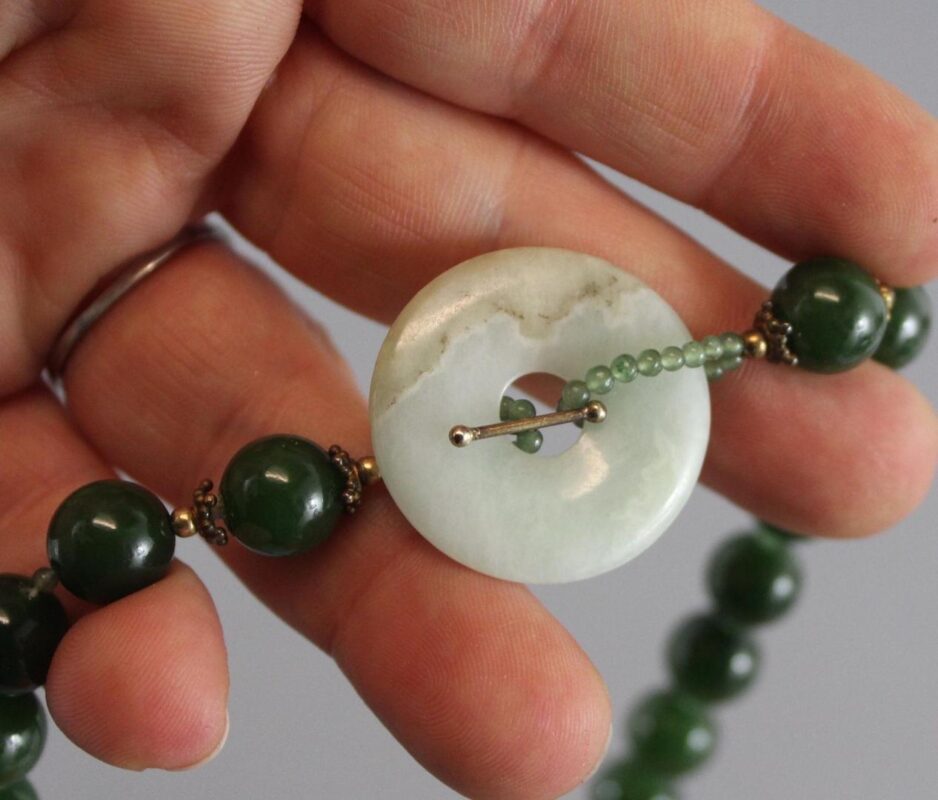
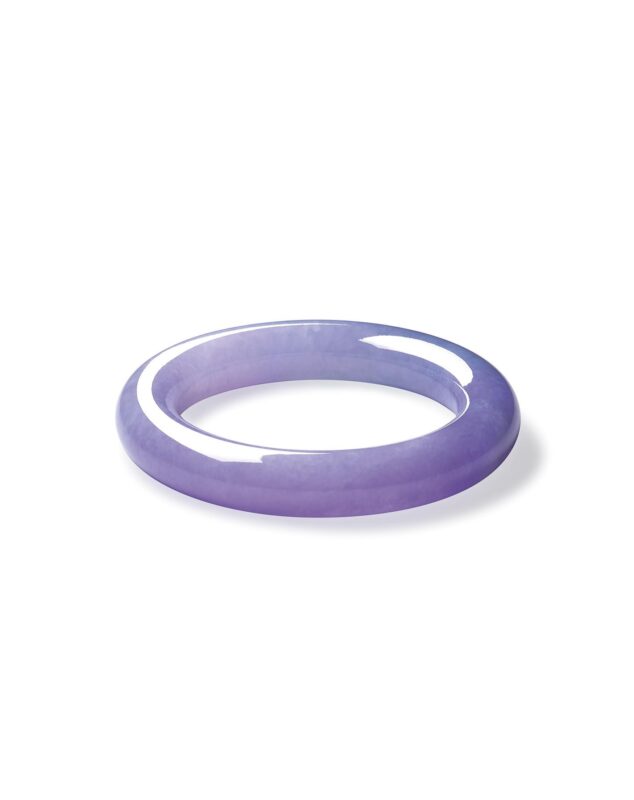
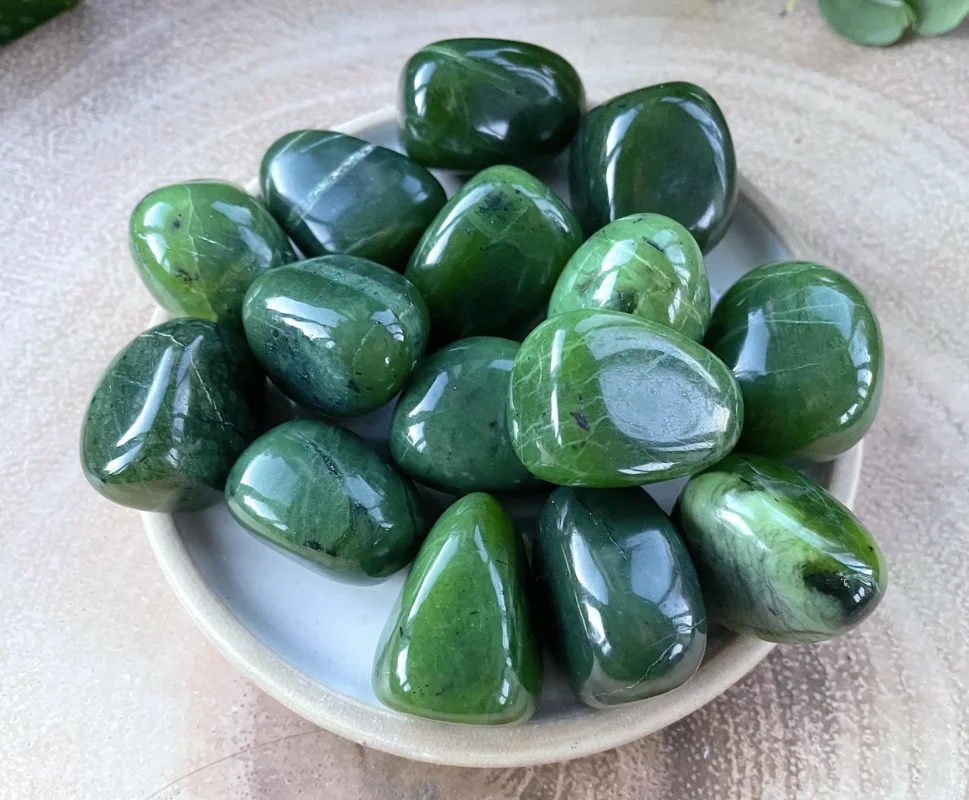
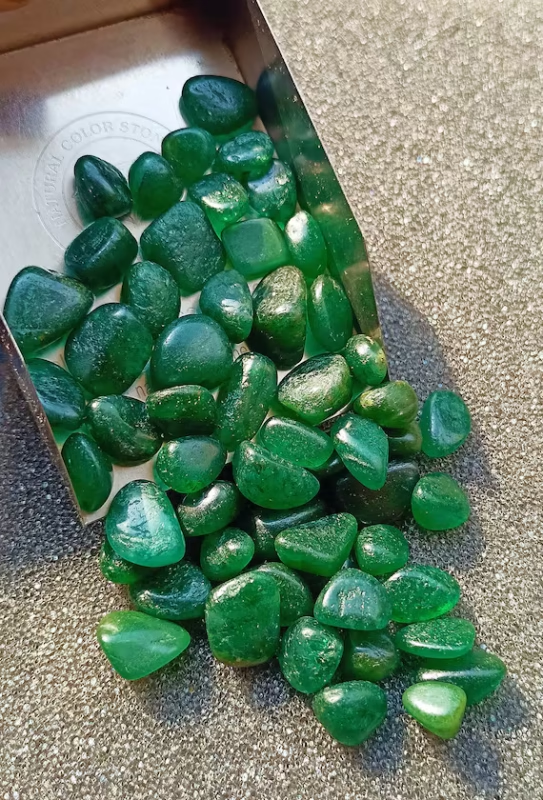
4. Magnification: Search For Bubbles, Fissures, And Dye
Use a jeweler’s loupe (10x) or a macro phone lens.
What to look for:
• Gas bubbles – tiny round dots inside indicate glass imitation.
• Straight, sharp lines – molded or pressed marks in plastic.
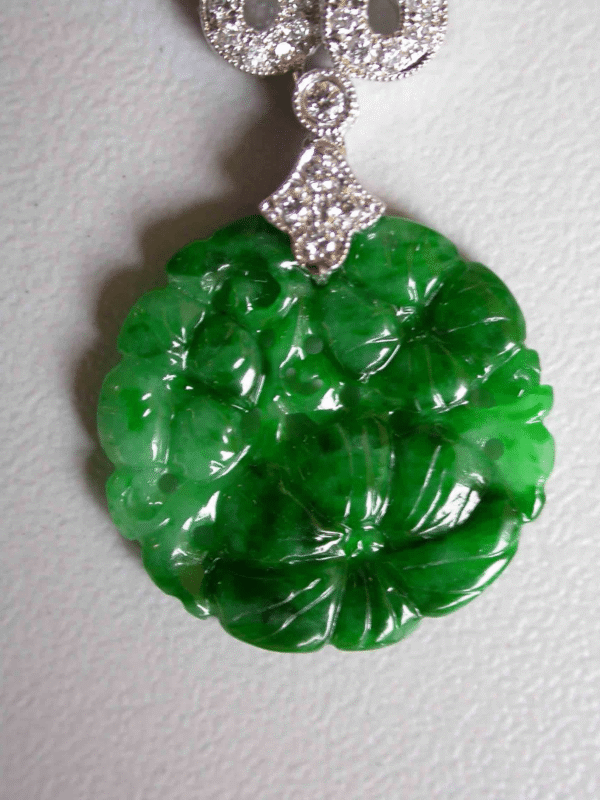
• Concentrated color in cracks or pits – a sign of dyed stones. The dye tends to pool in fissures, which is typical for Type C jade or dyed serpentine sold as “jade.” Sobling+1
Natural jadeite, especially Type A, typically shows a fibrous or granular texture without bubbles or strong dye concentrations.
5. Scratch Test (With Caution)
Jadeite’s hardness is about 6.5–7, similar to quartz. gia.edu+1
• A steel knife (hardness ~5.5) should not easily scratch it.
• However, other gemstones can scratch jadeite, and you can damage a valuable piece, so this test is not recommended for finished jewelry.
If a knife leaves a deep, easy scratch, you are not dealing with real jadeite.
6. Sound Test For Bangles And Beads
If you have two jade rings or bangles:
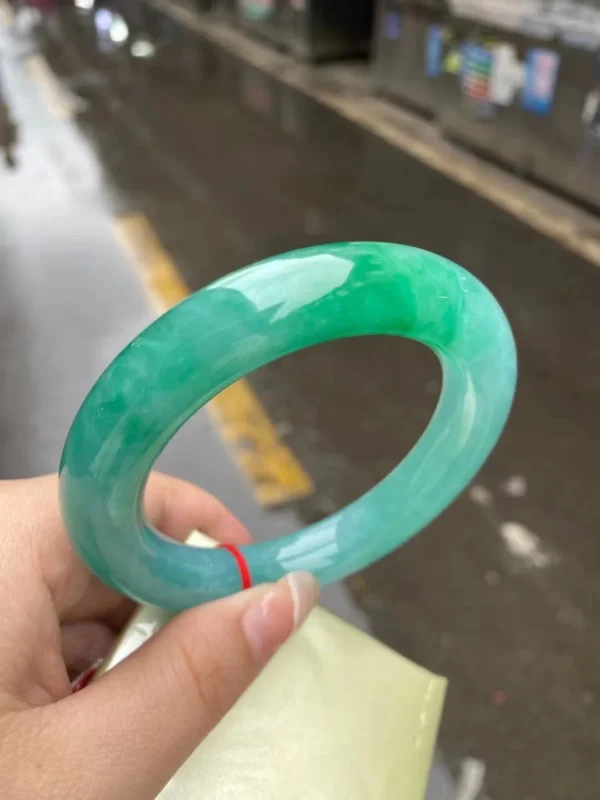
• Gently tap them together.
• Fine jadeite often produces a clear, bell-like ring.
• Glass may sound higher-pitched and brittle; plastic makes a dull thud.
Do this very carefully — never strike hard enough to risk chipping.
7. UV Light (Black Light) Check
Under long-wave UV light:
• Most natural jadeite is inert or shows weak fluorescence. Wikipedia
• Synthetic polymers or some dyes may fluoresce more strongly (blue, green, or other colors).
This is not a final test, but a strong, uneven glow in certain areas may indicate treatments.
8. Look For Unrealistic Perfection
Be suspicious if:
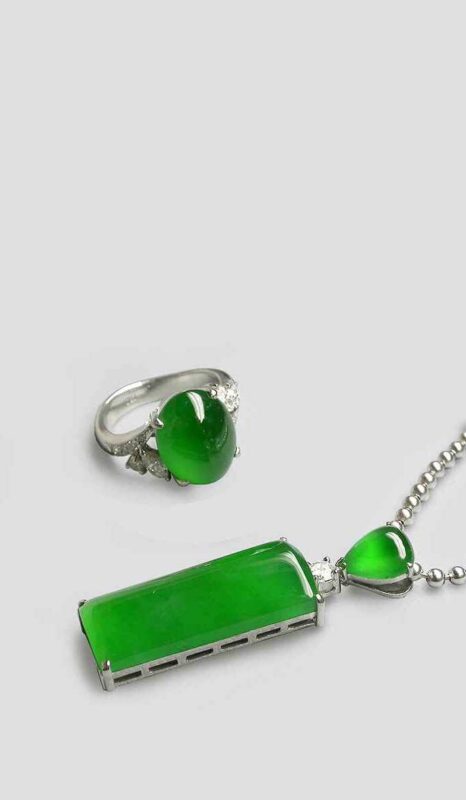
• The color is perfectly uniform neon green across the entire piece, especially at a low price.
• Every bead in a strand is exactly the same intense hue and transparency, yet the cost is minimal.
Real jadeite usually has gentle color variations, some cloudy zones, or subtle streaks. Perfect, “radioactive” color often points to dye.
9. The “Too Good To Be True” Price Rule
Natural A-jade, especially in strong green or icy translucent qualities, is rare and valuable. If a seller offers:
• “Imperial green Burmese jadeite bangle” for the price of costume jewelry,
assume something is wrong — either heavy treatment, imitation material, or misleading labeling. SpringCity Dream+1
10. Trustworthy Seller And Documentation
Ultimately, the strongest protection is who you buy from:
• Reputable dealers who specialize in jade
• Clear return policies
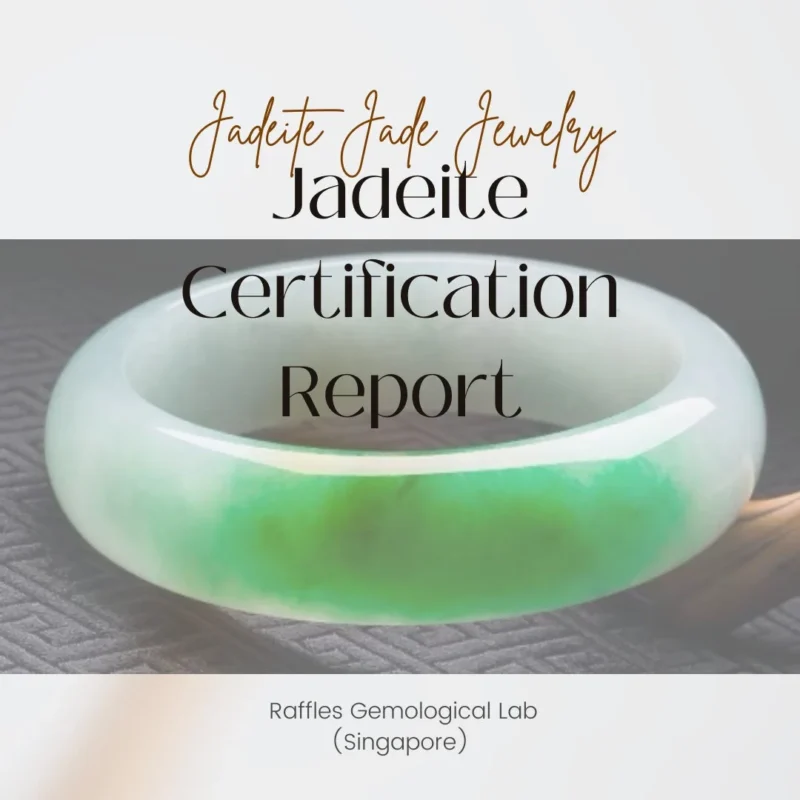
• Gemological certificates from respected labs
If the seller hides, refuses, or ignores questions about treatment and certification, walk away.
Why Photos Can Lie: Special Risks When Buying Jadeite Online
Online shopping is convenient, but jadeite is especially tricky to judge in photos.
Lighting Tricks
Sellers can use:
• Strong light from behind to make opaque jade look more translucent
• Green-tinted lighting or filters to enhance color
• Heavy editing to remove dark spots or make texture appear finer
Always ask for:
Photos in natural daylight
Close-up, unedited shots
Short videos showing how the stone looks in motion
Background Color And Skin Tone
A jade bangle placed on very pale skin or a white background may look more vibrant. Against darker backgrounds, color is revealed more realistically.
If every photo is heavily staged with dramatic backgrounds and filters, request at least one plain, neutral-light shot.
CGI Or AI-Generated Images
As image-generation tools get better, you may encounter listings using unrealistic renders. Warning signs:
• The jade looks almost “too perfect,” like glass
• The same image appears under multiple different brand names or prices
Reverse-image search can sometimes expose copied or stock photos.
The Power Of Lab Certification: Your Best Defense Against Fake Jadeite
For anything beyond low-cost fashion pieces, professional testing is worth the investment.
What Do Gem Labs Actually Test?
Reputable labs (GIA, NGI, Raffles, local national gem labs, etc.) use: gia.edu+2gia.edu+2
• Refractive index measurements
• Specific gravity and density tests
• Microscopic examination
• Infrared spectroscopy or Raman spectroscopy to detect polymer impregnation and distinguish jadeite from nephrite and other lookalikes
Studies show that infrared spectroscopy and Raman spectroscopy are particularly effective at identifying polymer-impregnated B-type jade. gia.edu+2MagiLABS+2
What Should A Good Certificate Say?
Look for these details:
Identity: “Natural jadeite jade” or “Natural jadeite”
Treatment: “No indications of impregnation or dyeing detected” (for Type A)
Color description and transparency
Measurements and weight
Lab name, logo, and report number
Some labs will also note: “Fei Cui (jadeite, omphacite, kosmochlor)” when analyzing mixed pyroxene aggregates, which is a technical term used in Chinese markets. MDPI+1
When Is A Certificate Essential?
You should always insist on independent certification when:
• Buying “imperial green” or very expensive icy jade
• Buying as an investment or heirloom
• Buying online from overseas sellers with no local reputation
For small fashion pieces at low price points, a certificate may be optional — but for serious jade, it is non-negotiable.
Quick Reference: Real vs Fake Chinese Jadeite (Cheat Sheet)
Use this simple table as a fast reminder:
| Feature | Genuine Jadeite (Type A) | Common Fakes / Treated Stones |
|---|
| Feel | Cool, heavy, solid | Light (plastic), or glassy but too perfect |
| Luster | Waxy to glassy, soft reflections | Dull or mirror-like, harsh reflections |
| Color | Slightly uneven, natural gradients | Neon or very uniform green at low price |
| Internal Features | Fibrous/granular, no bubbles | Bubbles (glass), dye concentrated in cracks (Type C) |
| Treatments | None (only wax) | Acid-bleached, polymer-filled, dyed |
| Price | Reflects rarity and quality | “Too good to be true” offers |
| Lab Report | From recognized gem lab, states “natural jadeite jade” | No report, vague promises, or unverifiable documents |