Blog

Chinese Jadeite Bangles: From Ancient Protection Charm To Viral Everyday Luxury

Chinese Jadeite Bangles: From Ancient Protection Charm To Viral Everyday Luxury

If there is one piece of Chinese jewelry that never goes out of style, it is the jade bangle.

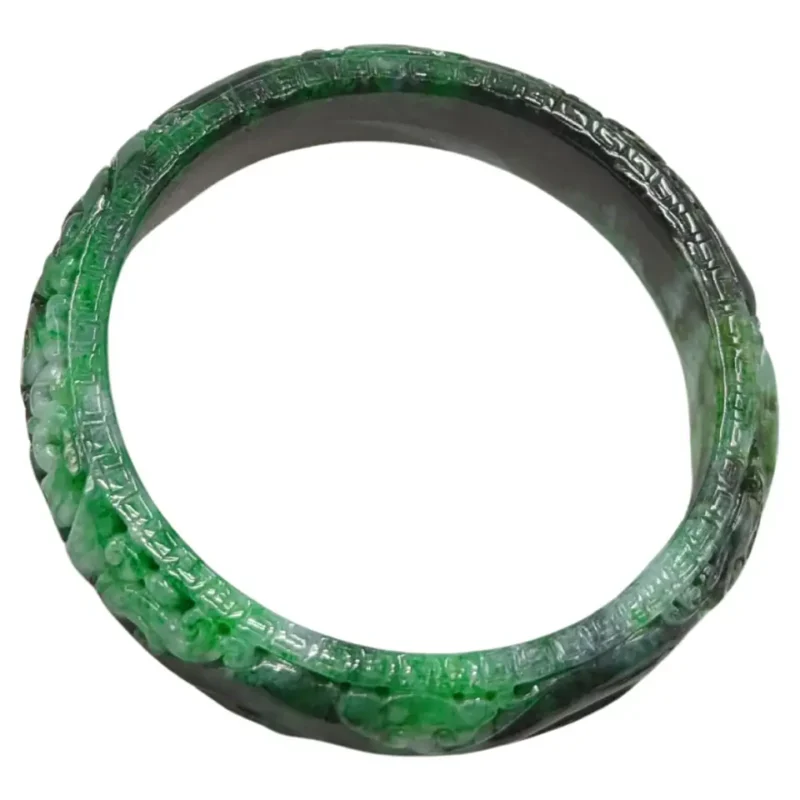
For generations, Chinese jadeite bangles have been more than simple bracelets. They are worn as shields of protection, symbols of status, carriers of blessings, and family heirlooms passed from mothers to daughters. Jade Hunt+2龙门实业+2

Today, they are also trending on social media: clean green circles on minimalist wrists, styled with streetwear, office looks, and wedding outfits. This guide explains the full story of Chinese jadeite bangles – from their ancient cultural roots to how they are made, what drives their value, and how to choose the right bangle for your wrist.


Why Chinese Jadeite Bangles Are So Obsessed Over: Protection, Luck, And Power In One Circle

In Chinese culture, jade (yu, 玉) has always been much more than a pretty stone. It is associated with purity, intelligence, justice, loyalty, health, longevity, wealth, and luck. MAYS GEMS+2Gen.K Jewelry+2

When jade is carved into a continuous circle – a bangle with no beginning and no end – the symbolism intensifies.

The Bangle As A Protective Shield

For centuries, families have believed that a jade bangle:

  1. Absorbs harm meant for the wearer

  2. Shields against negative energy and evil spirits

  3. Warns of danger by cracking instead of your bones

Many stories (and viral videos) show bangles breaking during accidents – car doors slamming, falls, impacts – and people say “the jade took the hit for me.” Modern blogs and jewelers still describe jade bangles as talismans of protection and good fortune. lovalry.com+3MAYS GEMS+3lovalry.com+3

A Circle Of Longevity, Harmony, And Love

Because of its endless loop, the bangle shape is also read as:

• Longevity and continuity
• Harmony and balance in life
• Unbroken love and family connection

In many families, mothers give a jade bangle to daughters as a rite of passage – a visible blessing for a life filled with strength, grace, and good fortune.

Jade Or Jadeite? The Truth Behind “Chinese Jade Bangles”

Not every “Chinese jade bangle” is made of jadeite. To understand value, you must understand the materials.

Nephrite vs. Jadeite – Two Different “Jades”

Both nephrite and jadeite are legitimately called “jade,” but they are different minerals with different market levels. Wikipedia+1

  1. Nephrite
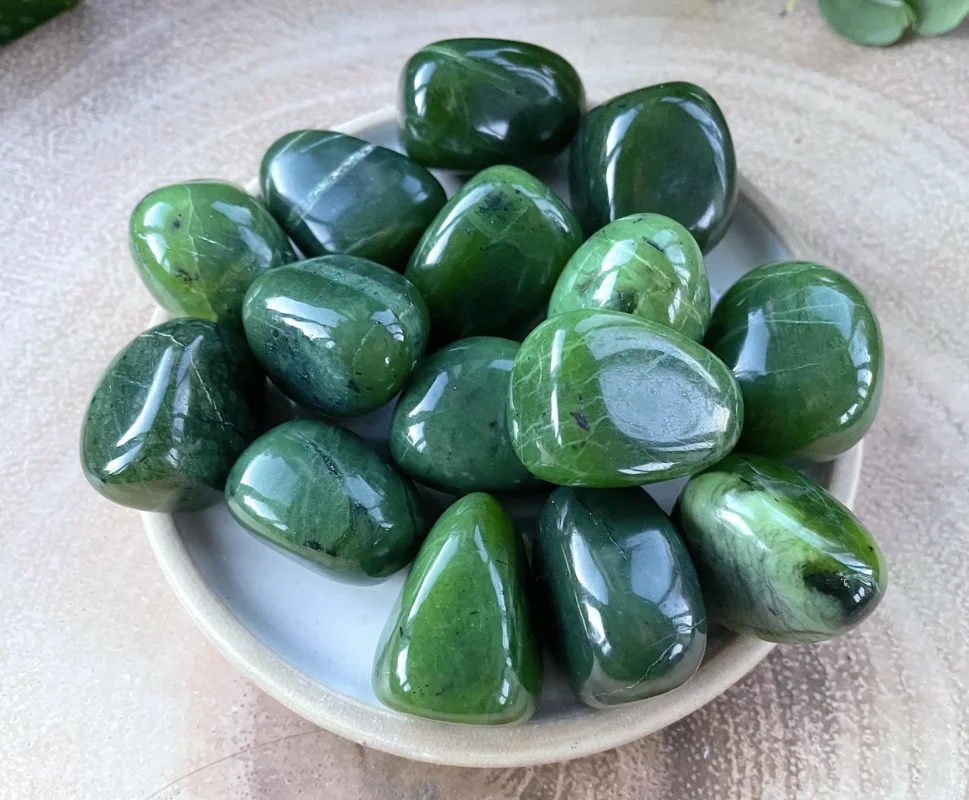
    • Softer, slightly less dense
    • Usually more opaque, with a soft “greasy” luster
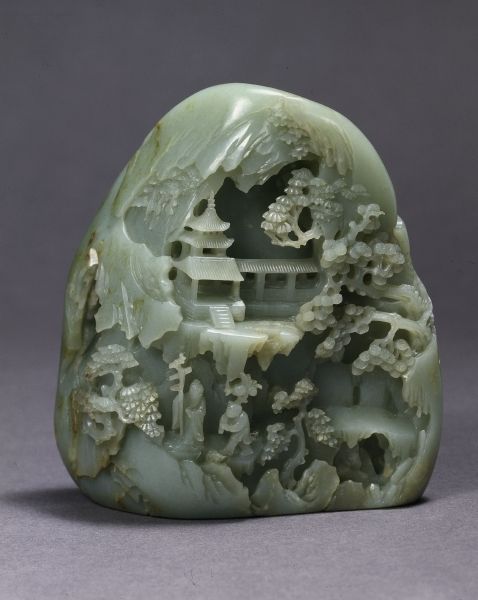
    • Historically mined within China and Central Asia

  2. Jadeite
    • Hardness around 6.5–7, density around 3.3–3.4 (feels heavy) MAYS GEMS+1
    • Wider color range: intense green, icy white, lavender, yellow, black
    • Most fine jadeite for Chinese bangles comes from Myanmar (Burma)

When people say “Chinese jadeite bangle” in the modern market, they usually mean jadeite jade bracelets cut and carved for Chinese consumers, even though the rough comes mainly from Myanmar.

Secret History: How Jadeite Bangles Became The Must-Have Chinese Heirloom

Jade has been treasured in China for thousands of years, but nephrite was the dominant jade in ancient times. Jadeite only entered Chinese high society in large quantities in the late 18th–19th century, when Burmese jadeite started to arrive through trade routes and tribute to the Qing court. Wikipedia+1

Chinese elites immediately fell in love with:

• The vibrant, emerald-like green
• The glassier transparency
• The way light seems to sit inside the stone

Bangles became a perfect way to showcase this new luxury material: a continuous circle of color visible from every angle. Over time, the jadeite bangle evolved from an imperial status symbol into a common sign of wealth, refinement, and good taste for women across many social classes. MAYS GEMS+2Gen.K Jewelry+2


Inside The Workshop: How A Jadeite Bangle Is Actually Made

Most people never see how much skill and risk go into a single jadeite bangle. The process is complex and unforgiving: one wrong cut can destroy a very expensive piece of rough.

Step 1: Selecting The Jadeite Boulder

The journey begins with rough jadeite boulders, many from northern Myanmar. Dealers “gamble” on what lies beneath a weathered exterior. They look for:

• Promising patches of green or icy translucency at the surface
• Minimal cracks or dark stains
• Sufficient size to yield a solid bangle ring Singapore Jadeite+2MAYS GEMS+2

Because bangles are cut from a single solid ring, the rough must be thick and clean enough to allow a full circle with no structural weaknesses.

Step 2: Slicing Discs (Bangle Blanks)

Once the best area is chosen, the boulder is sliced into circular discs using diamond-tipped saws and plenty of water for cooling. Each disc will become one bangle.

The cutter tries to:

• Maximize the number of discs
• Keep the best color zones centered
• Avoid cracks that might break the ring later MAYS GEMS+1

Step 3: Coring The Inner Circle

Using a coring drill with a cylindrical bit, the inner circle of the bangle is cut out. This is a critical step: if the stone is under stress or has hidden fractures, it may crack during coring and the value is lost. Jade Fiend+1

Step 4: Shaping The Outer Profile

The rough ring is then taken to a point carver or grinding wheel:

• The outer circumference is rounded
• Cross-section profile (round, half-round, flat) is shaped
• Edges are smoothed to make the bangle comfortable on the wrist

Step 5: Hand Polishing

Finally, the bangle is polished using progressively finer abrasives until it achieves:

• A waxy, satin luster for more opaque material
• A glassy, mirror-like finish for icy or high-translucency jadeite

Traditional accounts describe how jade’s extreme toughness meant that ancient carvers had to abrade it slowly with sand pastes, bone, and bamboo tools; modern equipment speeds up the process but the basic principle is unchanged. orientaljadejewelry.com+1

The result: a seamless circle that looks simple, but represents multiple stages of careful decision-making and hand skill.


7 Big Factors That Decide The Price Of A Chinese Jadeite Bangle

Why is one jadeite bangle $80 and another $80,000? These seven factors drive the difference.

1. Color: The Queen Of Jadeite Value

Color is the most obvious and most important value driver. Singapore Jadeite+2lovalry.com+2

Top-tier bangles show:

Hue – a pure, vivid green without gray, brown, or muddy tones
Saturation – rich, intense color, not washed-out
Evenness – smooth distribution of color around the entire circle

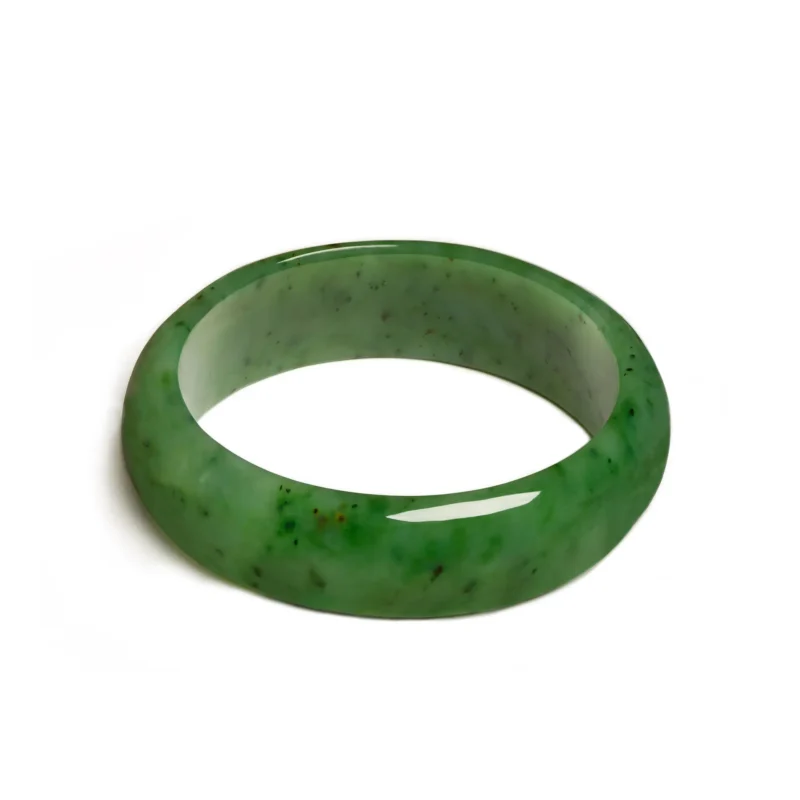
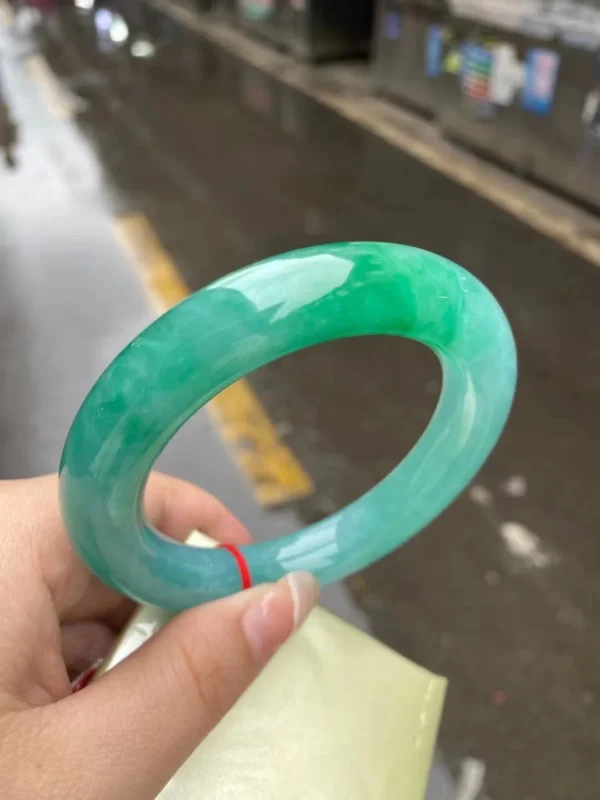
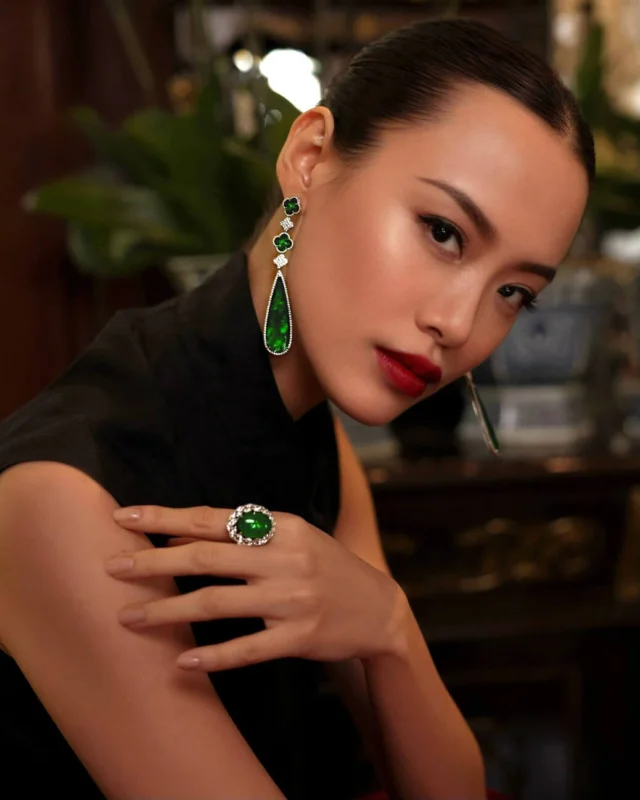
The most coveted is “imperial green” jadeite: a glowing, medium-to-strong green with high translucency. Bangles in this quality can reach extremely high prices, especially when certified natural (Type A). Singapore Jadeite+1

Other popular colors include:

• “Apple green” – bright, cheerful greens
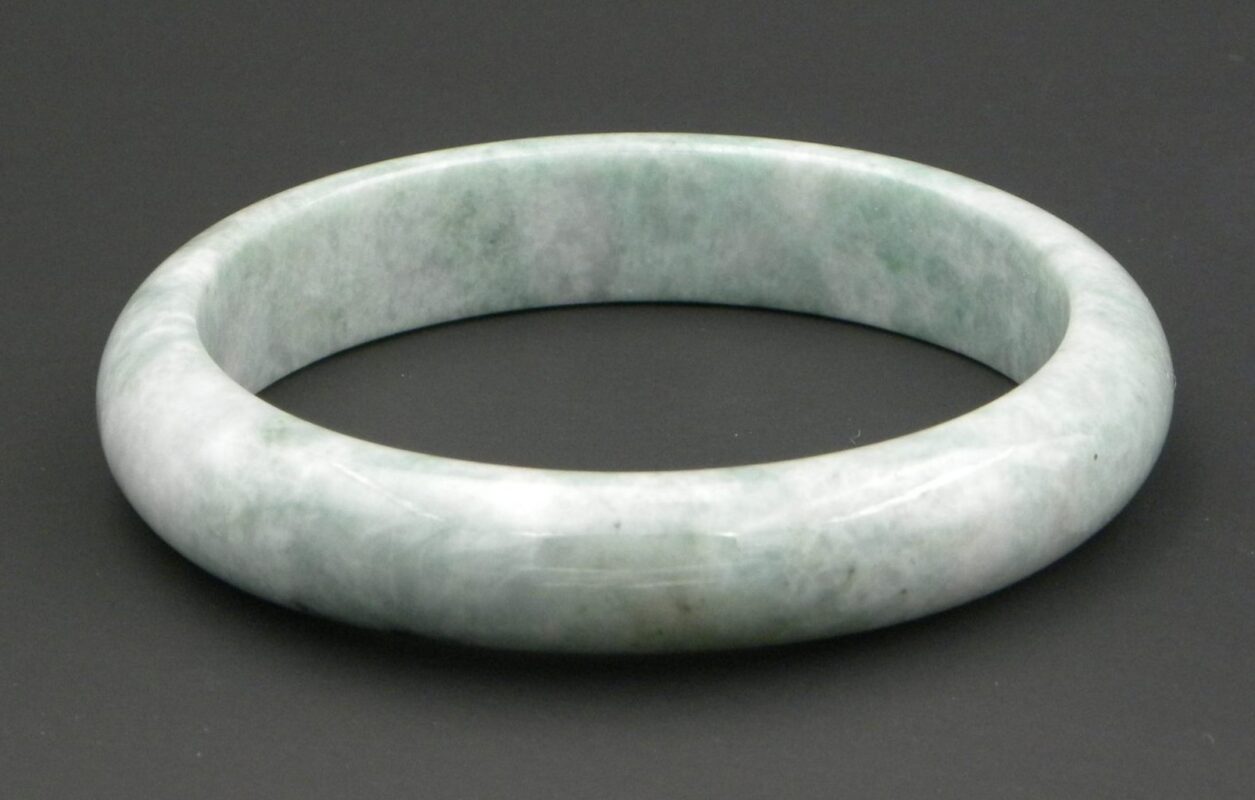
• “Icy” or “glass” – almost colorless but very translucent
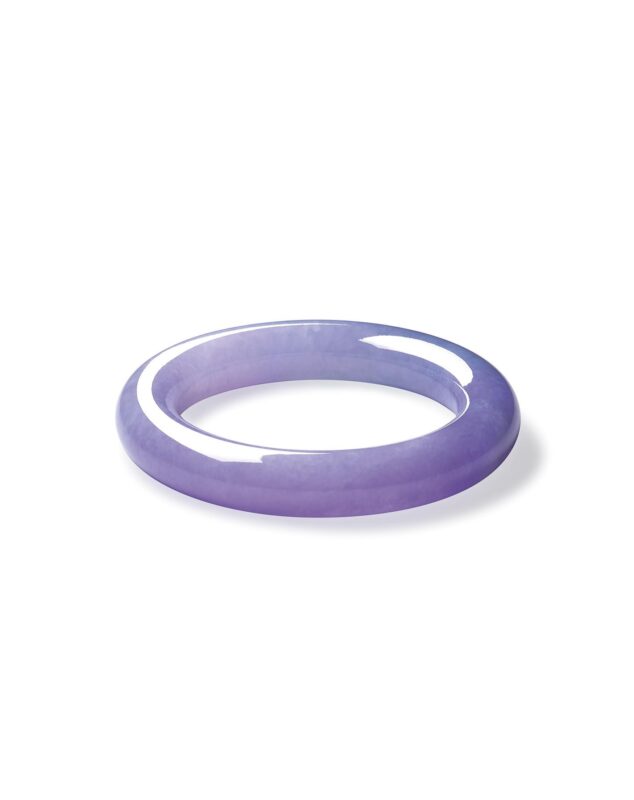
• Lavender – soft violet tones, often prized for femininity and calm
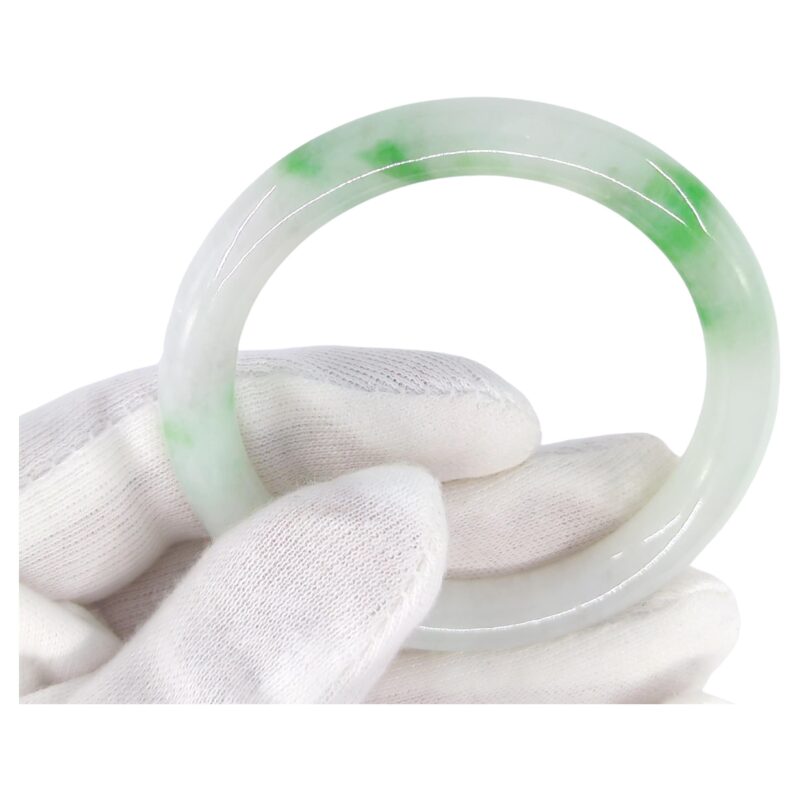
• “Spring” bangles – white or icy base with splashes of bright green

2. Transparency: From Opaque To Icy

Jadeite bangles range from dense and opaque to almost glass-like. Greater translucency generally means higher value, especially when combined with strong color. Singapore Jadeite+1

Levels are often described as:

  1. Opaque

  2. Slightly translucent

  3. Translucent

  4. Semi-transparent / icy

Icy jadeite bangles with bright, even color are especially sought after.

3. Texture And Clarity

Fine jadeite has a smooth, compact micro-crystal structure that looks delicate and even. Coarser, “sugary” textures scatter light and reduce the stone’s glow. Singapore Jadeite+1

Dark inclusions, obvious cloudy zones, or surface-reaching cracks reduce value. That said, many everyday bangles include natural “birthmarks” that do not affect wear.

4. Size, Thickness, And Fit

Because bangles are made from a single ring, larger inner diameters and thicker walls require larger and cleaner rough – which is rarer and more expensive.

Collectors often look for:

• Comfortable inner diameter that slides over the knuckles but fits snugly
• Balanced wall thickness: not so thin that it feels fragile, not so thick that it looks bulky

5. Natural (Type A) vs. Treated (Type B/C)

As in your earlier blogs, treatment status is critical:

• Type A – natural, untreated jadeite; only polished and waxed
• Type B – acid-bleached and polymer-impregnated
• Type C – dyed color

For serious collectors and long-term value, Type A bangles are the standard. Many reputable brands provide lab reports confirming that no polymer impregnation or dye was detected. Singapore Jadeite+2MAYS GEMS+2

6. Craftsmanship And Cross-Section Shape

Different profiles change both look and price:

  1. Round / full-round: classic, luxurious feel, often commands a premium

  2. Half-round: flat inside, rounded outside; more comfortable for some wearers

  3. Flat or square-edged: modern, edgy look

Smooth, even thickness throughout and high-quality polish are signs of good craftsmanship.

7. Brand, Certification, Story

Bangles sold by recognized jade houses or accompanied by certificates from established gem labs tend to attract higher trust and pricing. The story also matters:

• Origin details (Myanmar jadeite, old-mine material, family heirloom)
• Named collections or limited editions

In some cases, celebrity provenance or auction history can send prices into the stratosphere. Singapore Jadeite+2Something About Rocks+2


Viral Question: Why Do People Wear Jadeite Bangles 24/7 (Even In The Shower)?

It is common to see people – especially older Chinese women – who never take their jade bangle off. There are several reasons.

1. “The Bangle Is Part Of Me Now”

Because bangles are solid rings, they are often tight to get over the knuckles. Once on, they stay on. Many wearers describe them as part of their body, almost like a second wrist bone.

2. Protection 24 Hours A Day

Believers feel that jade’s protective and balancing energy works best when the stone is constantly in contact with the skin. MAYS GEMS+2Buddha3bodhi+2

3. Building A Personal Patina

Over time, body oils and daily wear can soften the polish and, according to some traditions, even “wake up” the jade, making it look more alive. Whether scientifically accurate or not, many people feel their bangles become uniquely “theirs” with long wear.

4. Emotional And Family Connection

A bangle given by a parent, grandparent, or partner becomes a physical link to them. Removing it can feel emotionally wrong, especially if the person has passed away. Bliss Lau+1


Choosing Your First Chinese Jadeite Bangle: Step-By-Step Buyer’s Guide

Buying a bangle is different from buying a ring or pendant. You need to consider fit, comfort, and lifestyle as much as beauty.

Step 1: Measure Your Hand Correctly

Unlike rings, bangles must pass over the widest part of your hand.

Basic method:

  1. Fold your thumb across your palm.

  2. Wrap a soft tape around the knuckles at the widest point.

  3. Note the circumference and convert it to inner diameter (divide by π ≈ 3.14).

Compare with jewelry store sizing charts to find your ideal bangle size.

Step 2: Decide Your Priority – Color, Clarity, Or Size?

Ask yourself:

• Do you want the strongest possible green, even if the bangle is slimmer or smaller?
• Do you prefer an icy, translucent look, even if the color is lighter?
• Is having a comfortable everyday size more important than absolute perfection?

This helps you focus your budget where it matters most.

Step 3: Set A Treatment Standard

For fashion and casual wear, treated jade (Type B/C) may be acceptable at low prices. For heirloom or investment pieces, insist on natural Type A jadeite with lab certification
Step 4: Inspect Photos Or View In Person

Look for:

• Color consistency around the entire circumference
• Visible cracks or cloudy spots
• Natural but pleasing variations (veins, “spring” patterns)

If buying online, request:

– Photos in natural lighting
– Short videos rotating the bangle
– Clear pictures of the certificate

Step 5: Consider Lifestyle And Safety

Bangles are beautiful but can be vulnerable to hard impacts.

• If you work in a very physical job or around machinery, consider a thicker, tougher bangle or wearing it only off-duty.
• Avoid metal bangles worn next to jade; in a collision, metal can chip the jade.

Step 6: Check Return And Resize Policies

Jade bangles cannot be resized like metal bracelets. If the size is wrong, you often need a different piece altogether, so a fair return/exchange policy is important.


SEO-Focused FAQ: Questions People Ask About Chinese Jadeite Bangles

What Is The Meaning Of A Green Jadeite Bangle?

Green jadeite bangles traditionally symbolize good fortune, safety, prosperity, and health. In Chinese belief, jade protects the wearer from harm and absorbs negative energy, making it a popular gift for loved ones. lovalry.com+2Buddha3bodhi+2

Is It True That A Jade Bangle Cracks To Protect You?

Many people believe that when a bangle cracks during an accident, it has “taken the damage” on behalf of the wearer. While this is symbolic rather than scientific, the belief is deeply rooted and reinforces jade’s role as a protective amulet. MAYS GEMS+2Just Gold Jewellery+2

Can I Shower Or Sleep With A Jadeite Bangle?

Yes, many people wear jadeite bangles 24/7. Clean water and mild soap will not harm natural Type A jadeite. Avoid harsh chemicals, very hot water, or strong detergents, which can damage polish or affect treated stones. MAYS GEMS+1

How Do I Know If My Jade Bangle Is Real Jadeite?

Look for:

• Cool, heavy feel
• Waxy to glassy luster
• Slight natural color variations
• A reputable seller and, ideally, a gemological certificate stating “natural jadeite jade” and treatment status.

For expensive bangles, professional lab testing is strongly recommended. Singapore Jadeite+2MAYS GEMS+2

Why Are Some Jadeite Bangles So Expensive?

High prices come from a combination of:

• Vivid, even color (especially imperial green)

• High translucency / icy quality
• Fine texture and minimal flaws
• Large size and thickness from clean rough
• Natural Type A status and strong provenance

Exceptional bangles can reach six-figure values in major jewelry markets.

Leave a Reply

Your email address will not be published. Required fields are marked *